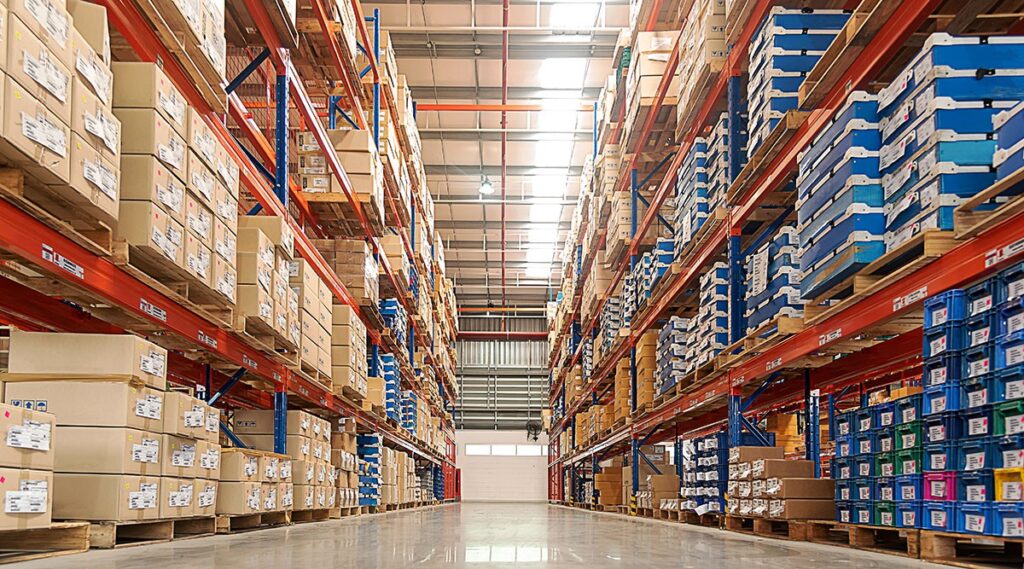


INFLUENCES OF FREE TRADE AGREEMENTS (FTA) ON VIETNAM’S LOGISTICS INDUSTRY
In the context of the global economy moving towards trade liberalization and deep integration, Free Trade Agreements (FTAs) play an increasingly important role in promoting import and export, attracting investment and developing supporting service industries, especially logistics. With its geostrategic location and export-oriented economy, Vietnam has actively signed and implemented more than 15 bilateral and multilateral FTAs. These FTAs are creating profound changes for the domestic logistics industry.
Mục Lục
Vietnam’s logistics market is on the rise thanks to FTAs
According to statistics from the Vietnam Logistics Services Association (VLA), the logistics industry currently accounts for about 4.5% of the country’s GDP, with an annual growth rate of 14-16%. The market is valued at about 42 billion USD in 2022, expected to reach 60-65 billion USD in 2025 if this rate is maintained.
New generation FTAs such as EVFTA (Vietnam – EU), CPTPP, UKVFTA, or RCEP (Regional Comprehensive Economic Partnership Agreement) have opened the door for Vietnamese goods to access large markets, creating great momentum for transportation, delivery, warehousing and distribution activities.
After EVFTA took effect, Vietnam’s exports to Europe increased significantly: in 2022 alone, export turnover to the EU reached more than 46.8 billion USD, an increase of nearly 16% compared to 2021. This led to increased demand for logistics, especially at major seaports such as Hai Phong, Cai Mep – Thi Vai, where container throughput increased by more than 10% in the same period.
Attracting investment and shifting global supply chains
The signing of FTAs has helped Vietnam become an attractive destination in the supply chain diversification strategy of international corporations. Many investors have been shifting production and building distribution centers in Vietnam to take advantage of tariff incentives. In 2022, FDI capital poured into the logistics sector will reach more than 1.5 billion USD, accounting for about 6% of the country’s total FDI capital. Notable examples include JD.com’s logistics and e-commerce center project in Long An worth 32 million USD or Kerry Logistics’ cold storage and pharmaceutical logistics in Ho Chi Minh City – to serve the ASEAN market. In Thailand, the government is investing heavily in the “Eastern Economic Corridor” (EEC) with a focus on developing logistics infrastructure to attract investors according to the post-FTA strategy. With its labor advantages, competitive costs and FTAs, Vietnam is also emerging as the “new logistics center of Southeast Asia” if it effectively takes advantage of this investment wave.
Institutional reform, infrastructure and logistics modernization
Many new-generation FTAs require member countries to improve the business environment, make information transparent, and simplify administrative procedures. This creates pressure and is also a great motivation for Vietnam to reform the logistics ecosystem.
Significant improvements:
• Electronic customs procedures and national single window connection have been applied in 11 ministries and sectors.
• Customs clearance time has been reduced to an average of 1.77 days for exports and 2.85 days for imports, according to the World Bank Report (2023).
• The Government approved the Master Plan for Logistics System Development to 2030, prioritizing the development of logistics centers in Bac Ninh, Hai Phong, Da Nang, Can Tho, and Ho Chi Minh City.
Competitive pressure – the driving force for innovation
Opening the logistics service market through FTAs also means that foreign enterprises have deeper access to the Vietnamese logistics market. “Giants” such as DHL, Maersk, Kuehne + Nagel, FedEx are present in Vietnam with modern technology systems and international standard services. We can witness some outstanding results when domestic logistics enterprises – especially SMEs (Small Medium Enterprises) are forced to digitally transform, invest in TMS (Transportation Management System), WMS (Warehouse Management System) to increase efficiency. In addition, the race for “green logistics” services, using renewable energy, and electric vehicles for transportation has also begun to meet the sustainability standards in FTAs.
Opportunities for cooperation and development of cross-border logistics
Expanding the international logistics service market
Vietnamese logistics enterprises can cooperate with partners in the EU, Canada, Japan, Australia – countries in the FTA bloc – to operate international logistics routes, thereby participating more deeply in the global supply chain. The refrigerated air transport route serving the export of Vietnamese agricultural products to the Netherlands and France is developing thanks to the EVFTA.
Strengthening border and intra-ASEAN connectivity
• With intra-bloc FTAs such as ATIGA, ACFTA, RCEP, Vietnam can strengthen logistics cooperation with Laos, Cambodia, Thailand, and China through economic corridors such as:
o North-South corridor (Kunming – Hanoi – Hai Phong)
o East-West corridor (Da Nang – Savannakhet – Bangkok)
• This is an opportunity to develop international intermodal road-rail logistics services, and at the same time establish regional distribution centers at the border.
Attracting investment and transferring logistics technology
FTAs help create a favorable investment environment, many multinational logistics corporations have expanded their networks in Vietnam (Maersk, DHL, Nippon Express …). In particular, Vietnamese enterprises can enter into joint ventures or franchises, learn modern supply chain management models, journey tracking technology, blockchain
Challenges to overcome
Despite its great potential, Vietnam’s logistics industry is also facing some major challenges:
• High logistics costs: Accounting for about 16-20% of GDP, while the world average is only 10-12%.
• Lack of synchronous infrastructure: Connections between roads – seaports – airlines are still limited, causing congestion and increasing transportation time.
• Lack of high-quality human resources: The demand for human resources with skills in supply chain management, logistics technology, and data analysis is increasing but the supply is limited.
Conclusion
Free Trade Agreements have been creating a strong boost for the Vietnamese logistics industry, opening up many opportunities to expand the market, attract investment and develop logistics services in a more modern, professional and sustainable direction.
However, to effectively utilize FTAs, logistics enterprises need to proactively invest in technology, improve operational capacity, build a high-quality workforce and strengthen international cooperation. At the same time, the government’s support in improving infrastructure, institutions and supporting businesses in digital transformation will be a decisive factor for the Vietnamese logistics industry to reach regional and global levels.
CONTACT INFORMATION
🏠 Head office: Room 1802, 18th Floor, CatBi Plaza Commercial Center Building, No. 1 Le Hong Phong, Ngo Quyen Ward, Hai Phong City, Vietnam.
📍 Hanoi Branch: 4th Floor, HB Building, No. 10 Thanh Liet Commune, Thanh Tri Ward, Hanoi Capital, Vietnam.
📍 Thai Binh Branch: Lot 01, Road 25, Ky Dong Urban Area, Tran Hung Dao Ward, Hung Yen Province, Vietnam.
📍 Quang Ninh Branch: Lot 06, Zone 8, Uong Bi Ward, Quang Ninh Province, Vietnam.
📞 Phone number: +(022) 53555099
🗂 MST: 0202163857
📱 Fanpage: https://www.facebook.com/psllogistics.JSC
🌐 Website: https://psl-logistics.vn/
📩 Email: info@psl-logistics.vn

OPTIMIZING TRANSPORTATION NETWORKS DURING PEAK SEASONS: WHERE SHOULD LOGISTICS COMPANIES START BEING PROACTIVE?
What Are Local Charges? Common Types of Local Charges in Shipping